The History Of Bunk Beds Children's
Bunk Beds Children's Create a Sense of Unity Bunk beds for kids create the feeling of unity and lasting bond between children who share a room. They are also practical as they provide extra wiggle space and can easily convert to two beds that can be used separately to be used in the future. Make sure your child is prepared for the top bunk by making sure they can safely climb up and down without assistance. Some children may be ready from the age of six. Size Bunk beds and loft beds come in different sizes. The most basic type is two twin or full-size mattresses that are joined to create a bunk bed. They're ideal for homes with a limited space. These beds are easy to take apart, and can be moved to an alternative location when you or your kids decide to change sleeping arrangements. If you're interested in a larger kids' bunk or loft bed, choose one with an integrated trundle bed or third mattress on casters, which can be pulled out and stored under the bunk below when it is not being used. This allows you to sleep three children in the same room comfortably and is perfect for families with two kids who are close in age. The most well-liked bunk bed that kids can use in their bedrooms is the twin over twin. This is due to the fact that it maximizes floor space by stacking twin beds that are similar on top of each other. They are generally less expensive than other options for bunk beds and offer a great solution to kids who live in a room together. Think about a bunk bed that has twin mattresses on top of full mattresses for children who are older. This kind of bunk bed has more storage for clothes and toys, and can accommodate two mattresses of full size. You'll save space in your bedroom. 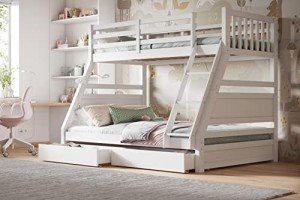 A twin over full over queen bed is an additional space-saving option. This type of bunk bed provides more storage, since the lower bunk can be used as a separate dresser or desk. This kind of bunk bed also comes with the added benefit of allowing larger mattresses, which are typically more comfortable for grownups to sleep on than the smaller twin mattresses that are typically found on traditional bunk beds. It is crucial to think about whether your child is ready to climb into the top bunk. Idealy your child should be able of safely climbing into the top bunk without assistance. This typically happens around five or six years of age. If your child is younger than that it is possible to consider a toddler or junior loft bed instead. Safety Children who use bunk beds must be able to follow the safety rules and climb up and down the ladder without assistance. Ladders should be positioned correctly and firmly connected to the bunk bed frame. They shouldn't be placed near furniture that could be used as steps or a climbing point, such as chairs or dressers. The ladders should also be kept free of toys, books or clothes that could cause snags. A night light is an excellent idea to place near the ladder to ensure that children can easily find their way up or down the ladder in the dark. In addition, the mattress's foundations must be examined to ensure there are no gaps between them and the frame enough for the head of a child to get trapped within. The mattresses must be of the proper size for the bunk bed to avoid overhanging or sagging that could cause a fall risk. A child should not sleep on the top bunk unless there are safety rails that are at least five inches higher than the mattress's surface. This will prevent serious injuries in the event that the child falls from the bunk. It is also essential to ensure that the rails of the guard aren't placed in a manner that a child can be trapped between them, which could lead to asphyxiation. A second safety concern is to make sure that the area surrounding the bunk beds is free of blinds, including their cords, ceiling fan, and heaters. Children who fall on these objects could suffer serious injuries, including concussions and fractures. It's a good idea to teach children to climb up and down the ladder, and to encourage them not to stand on the ladder or jump from one bed to the other. It's recommended to wear shoes instead of socks, or going without shoes on the ladder in order to decrease the chance of slipping and falling. It's also an excellent idea for the room to be carpeted under the bunk bed to decrease the chance of sustaining head injuries. Style Bunk beds for kids come in many different styles, from classic twin over twin to more modern triple bunks and L-shaped models. There are also options for different sizes of beds (twin twin XL, twin or full), finishes and entrances (straight ladder, angled ladder or staircase). Utilize our filters to narrow your search based on heights, lengths, end style (slat or curve, or panel) and color to find exactly the style you're looking for. Bunk beds are a great option for children who want to share a bed, but don't have enough room in their bedroom for two separate beds. They maximize space by allowing two children to sleep in the same room, and free the floor space for play, study or storage. Additionally, they provide an exciting element to any kid's bedroom decor. The most popular type of bunk bed is composed of two twin beds (or single beds) that are stacked one on top of the other. children's bunk for kids of all different ages. Some models come with stairs that can help children climb up to the top bunk. Some offer a ladder for older kids instead. Look into a larger bunk that can accommodate three beds in a smaller space. There are even a few with an extra trundle bed to accommodate an additional child. To make a stylish addition to a contemporary or modern kids' bedroom, consider a wooden bunk bed that has an eye-catching panel or shiplap design. There are a variety of styles to choose from, such as classic or traditional staining, grey and white paints or even natural wood finishes. Metal bunk beds are an alternative option that is versatile enough to fit any child's bedroom decor. They're typically sturdier than wooden bunk beds, and typically come in a range of cool colors, like silver, black or white. They're also easy to clean and often less expensive than wooden bunk beds. As an alternative to a traditional bunk bed, loft beds are also available. This bed has a raised platform instead of an elevated ladder to get to the top level. These beds are popular in dorms at colleges and cabins for vacation because they offer ample storage beneath desks, lounge furniture or toys. Stores Bunk beds are multi-functional furniture suitable for kids ' bedrooms, that combine sleeping and storage solutions. Beds that have drawers and shelves make it easy to arrange clothes, books, and toys, reducing clutter and making it easier to access belongings. Some bunks also have stairs that turn each step into a useful storage solution, freeing up valuable floor space without hindering safety or accessibility. Bunks with trundle beds are another excellent method to make the most of the space available in a child's bedroom. They can double as extra sleeping space when needed, which allows for sleepovers without permanently occupying more area on the floor [21The bunk beds are a great alternative to occupying the floor. Bunk beds can also be adapted to changing needs and as children develop. Beds that can be divided into two beds, such as the Brighton bunk bed and trundle drawer are an excellent example of this, allowing parents flexibility, while still keeping their kids' bedrooms functional. When choosing the best bunk beds, think about the design of the bedroom for your child. Solid wood bunk beds with natural finishes are versatile and durable while vinyl and metal models offer a more modern design. Whatever style you pick make sure you choose finishes and paints that are safe for children and environmentally friendly. Choose water-based paints that have low VOC levels and a GREENGUARD Gold certificate to ensure your kids are sleeping in a safe environment. Bunk beds for children aren't just a place to sleep. They can transform the space into a fantasy world, castle tower or spaceship. They also foster creativity and friendship. When they are paired with desks and other furniture for bedrooms for kids, they become a multi-functional space where play, learning and fun can meet. Include a nightstand or chest to complete the look. This will keep your child's bedroom clean and clean and ready for adventure. These pieces of bedroom furniture will make your child's room the most preferred place to study, sleep and play.